Thursday, September 22, 2011

Rick Perry's chances

At the time of writing, 'Real Clear Politics' show Rick Perry's poll ratings to be the highest of all the runners for Republican Presidential nomination. Since the Governor of Texas entered the race he has topped the polls, pushing ahead past the other front-runner Mitt Romney. Perry and Romney have consistently been first and second respectively, leaving the rest of the candidates trailing behind and turning the campaign into a two-horse race.


Perry's tendency to be outspoken has led to accusations of a lack of intelligence. One nickname he has acquired is "Governor Goodhair", implying that he looks the part but his appeal is chiefly superficial. Perry is not exactly an ideas man, and is perpetually surrounded by scores of advisers. His policy focus as Governor has been on jobs and business and not much else (save the continually re-emerging and much-regretted initiative of making the HPV vaccine compulsory for Texan girls).


One of the problems Perry has is his resemblance to former President, George W. Bush. The remark is often made that the similarities are numerous: their positions as Governor of Texas, their manner of speaking and their perceived stupidity are some examples. Perry and his team have repeatedly tried to distance his image from Bush's, providing opposing outlooks on key issues such as immigration. During one campaign trail, Perry skilfully used the comparison to highlight the difference in class. Asserting his authenticity as a true cowboy Texan, he told the press “I went to Texas A&M. He went to Yale.” (Some may say this was a little unusual for a Republican - to start a 'class war'.) However there is no denying that Americans will be reminded of Bush while the provocative conservative speaks with the same voice and gestures. But maybe the caricature is not so worrying. If Perry is the new Bush, Romney is the new McCain - and only one of these became President.


The two men have also both been advised by Republican strategist Karl Rove, although their relationship is tense to say the least. Their 'feud' could have serious repercussions; a National Journal article by Alex Roarty noted that Rove was an "influential gateway to the donor community Perry must tap". It doesn't seem likely that they'll become best buds any time soon. Only recently Rove joined in with the recent criticism of Perry's views on Social Security, calling them "toxic". Democrats and Republicans alike condemned the Governor's declaration that the retirement program was a "Ponzi scheme".


This was not the first instance of Rick Perry's controversial views being rounded upon - in August, Perry called the measure of quantitative easing by the Federal Reserve "almost treacherous — or treasonous… we would treat [Ben Bernanke] pretty ugly down in Texas". Karl Rove intervened here too, saying that it wasn't done to insult the chairman of the Federal Reserve. Defending the un-Presidential comments, Perry said somewhat lamely, “Look, I’m just passionate about the issue".


Nevertheless, Rick Perry is irrefutably attractive to the Tea Party faction of the Republican Party, and evangelicals as a whole (being devoid of fear in mixing church and state). Mitt Romney on the other hand is regarded with suspicion by many Republicans, seen as a moderate despite having criticised Roe vs Wade in the past, being pro-capital punishment and opposing same-sex marriage.


Yet apparent 'lightweight' Rick Perry could be under real threat from Mitt Romney. After all, Perry only formally declared his candidacy just over a month ago, giving him a short-term advantage. Romney has money, lots of it, which is always valuable in running expensive campaigns. He came second-place last time, which is always a good position to be in. Furthermore, having adopted New Hampshire as his must-win state, he is in a strong lead there. Having allocated himself as the moderate candidate, Romney presumably hopes to split the conservative votes between the vast choice presented to the electorate (Rick Perry, Michelle Bachmann, Ron Paul, etc). Most importantly perhaps - as former candidate Tim Pawlenty has pointed out - "Romney runs a little better against Barack Obama".


Whilst Romney has the ability to win votes from moderate Democrats and independent voters, Perry may scare them off. In contrast, the longest-serving governor in Texas history, who has never lost an election, may have a high probability of winning this race - but it'll be a far greater challenge to overthrow Obama.

Monday, July 18, 2011

Hackgate resignations

I'm going to keep a list of resignations over #hackgate.
Expect this to be updated soon.

  • John Yates - 18 July 2011 - was Metropolitan Police assistant commissioner
  • Sir Paul Stephenson - 17 July 2011 - was Metropolitan Police commissioner
  • Les Hinton - 15 July 2011 - was CEO of Dow Jones & Co
  • Rebekah Brooks - 15 July 2011 - was CEO of News International
  • Tom Crone - 13 July 2011 - was legal manager at News International
  • Andy Coulson - 26 January 2007 and 21 January 2011 - was News of the World editor, then was Prime Minister's Director of Communications

Sunday, July 17, 2011

How To Be A Woman by Caitlin Moran

There has been a massive buzz around this book, in fact it could be better described as a clamour. On Twitter, anyway. I myself was quite looking forward to reading her new semi-autobiographical novel, full of feminism and funniness - yes, both! Simultaneously!

I didn't buy it because I felt guilty reading that when I have a million books to read for A-Levels. Shit, I'm feeling guilty right now. But then someone offered to lend it to me and I thought this was a sign it was meant to be, or something.

It's called 'How To Be A Woman'. Now, I wasn't expecting an instruction manual as such, but a little more direction would have been great. Am I not her target audience?

I'll start from the top. The aesthetics. Call me old-fashioned, but I can't stand the CAPITALS FOR EVERY PUNCH-LINE USED IN ORDER TO REALLY EMPHASISE THAT IT'S FUNNY or the italics or the repeated punctuation?????!!!!!!!!!!!!! Perhaps that is supposed to appeal to me, as a 17 year old female, but it really doesn't. I suppose Caitlin Moran is just too enthusiastic for me. And here lies my basic problem with the book: we're too different. Now, I know this isn't her fault. She couldn't have written the book as anyone else but herself, after all. But I don't think there are many that will be able to relate nowadays. I'll explain.

She grew up with a big family with an interminable number of sisters (although she only ever speaks of one, awkward), living up north, or wherever Wolverhampton is. As a Londoner and an only child from a single-parent family, I just can't sympathise with her experiences when she was younger. But also, the fact that her mother didn't even explain about periods for example is simply not relevant to teenagers today. We must be becoming more liberal about that kind of thing, because I didn't know of anybody, when I was 13 or thereabouts, who was that naive. People just know this stuff now, it's everywhere - in school I suppose, as well as being talked about more freely by their parents. Just ingrained in culture, in TV programmes, in adverts.

Then a teenage Caitlin moves to London, having miraculously found work at the Melody Maker. She doesn't explain how she does this though, which is what would actually interest me as someone who is yet to enter working life. Now that she's in London, and older, I should really be able to 'get her' a bit more. But there's another factor that just doesn't appeal to me: her desire to look cool. Now I hate those kind of people, the cool kids, that do things just to have them reported on Facebook afterwards. It's one of the many reasons I don't have any friends. They annoy me no end - and you probably think that's just because I'm not cool, and I'm jealous. That may be true. But it still pisses me off, when a grown woman writes "and then I went outside and had a fag" to round off every anecdote. I'm going to sound like a biology teacher here, but smoking isn't cool. I lose hope whenever I witness people 10, or more, years older than me, who still like to brag about how many drinks they had last night or how they are just sooo addicted to cigarettes and have tried to quit like a milliooon times but just can't do it!

I was previously under this illusion that people grew out of that stage, but I've discovered that they really do not. It's a shame, because it bores me terribly. Do what you like to do, and enjoy it. If you like smoking, all right. If you don't, okay. Neither is a particularly fascinating add-on to a story.

Also, her love for Lady Gaga is a massive turn-off. Her music is terrible; reminiscent of Eurotrash. I wouldn't be surprised if Lady Gaga were secretly a talented musician, but this fails to appear in her chart-toppings songs. Why doesn't Caitlin Moran, a former music journalist, recognise this? Then there's the 'Gaga' personality - oh but she is interesting and quirky, some of you may be thinking. No, she isn't: anyone can carry around a vintage-looking teacup and wave with only one finger. She's pretentious, and worse, she doesn't admit it. From the moment she declared on Jonathan Ross "I'm inspired by no one", I could not take her seriously. Her stage name is taken from Queen, her lightning bolt make-up from Bowie and her 'mermaid in a wheelchair' routine from Bette Midler. Which is all fair enough (sort of) if you 'fess up, but Lady Gaga hasn't done that.

Ultimately, as Hector in The History Boys says,

"The best moments in reading are when you come across something - a thought, a feeling, a way of looking at things - that you'd thought special, particular to you. And here it is, set down by someone else, a person you've never met, maybe even someone long dead. And it's as if a hand has come out, and taken yours."
For me, there weren't many of these moments. I started reading it thinking I was her target audience - after all, I needed to know How To Be A Woman, right? But I now realise that her reader should actually be someone of her age. My mother very much enjoyed it. But my mother already knows how to be a woman.

Wednesday, December 29, 2010

To what extent is Cameron a Thatcherite?


An essay title given to me by my Politics teacher. Here is my essay.

“It’s no wonder that today we learn the Foreign Secretary describes his gang as the children of Thatcher,” Ed Miliband said. “I’d rather be a child of Thatcher than a son of Brown,” replied a chuffed-looking Cameron. Most reacted to this, either cheerfully or glumly, by complaining of how badly Miliband is leading the Labour Party. However, most have ignored the fact Cameron has just admitted his ‘progressive’ party may not be so adverse to Thatcherism. His apparent endorsement of Thatcher may remind the electorate of Norman Lamont’s allegation that “rising unemployment is a price well worth paying”. Perhaps not a clever reminder during these harsh economic times rife with cuts to government spending and jobs.
In one respect, Cameron has made an effort to distance himself from Thatcher. That effort is his now ubiquitous mantra ‘The Big Society’. Thatcher once famously, or rather infamously, pronounced in an interview that there was “no such thing as society”. This flagship policy brings to mind One Nation Conservatism and serves to oppose Thatcher’s PR disaster, both in an attempt to counteract the impression of the Tories being a “nasty party”.
Furthermore, it is difficult to imagine Thatcher willing to form a coalition with the Lib Dems. One may speculate that she would have led a minority government with her head held high. Of course, this is very different to Cameron’s attitude, which The Indie reported as being labelled “defeatist” by Tory grassroots members. He is apparently even contemplating contesting the next election as a coalition, on a joint ticket.
Margaret Thatcher advocated Classical liberalism: free markets, free will of individuals, limited government. The implication of these beliefs was Social Darwinism. However flawed her belief system, at least she had one. Cameron, on the other hand, says he is “not a deeply ideological person”. How insipid.
It seems Cameron is willing to take whichever side, depending on his audience. The problem he faces is convincing the public the Tories have changed, while assuring the Tories they haven’t. This effort at trying to please everyone is encapsulated in the following quote, when Cameron claimed he was “certainly a big Thatcher fan, but I don’t know whether that makes me a Thatcherite”.
Robin Harris, Cameron’s former boss at the Conservative Research Department, made the case when writing for Standpoint that the PM is more of a Majorite than a Thatcherite, “with no clear philosophy but a ruthless streak and a pleasing manner”. Even Rupert Murdoch, the media tycoon that must be attributed credit for May’s muted Tory success, if one can even call it that, has said that Cameron “behaves as if he doesn’t believe in anything other than trying to construct what he believes will be the right public image”.
Some commentators take the view that David Cameron is not as great as Thatcher, whether ‘great’ is being used as a compliment or not. More of a lame duck like Major. He certainly is not as revolutionary, or as popular; after all the Tories won 43.87% of the vote in Thatcher’s first election whilst Cameron could not even scrape a majority. This is quite astounding when Gordon Brown was the most pitied man, if not the most hated, in politics at the time. Effectively, New Labour had handed the Tories a victorious election on a plate, but still they didn’t win.
There are differences, many, between Thatcher and Cameron. For one, the incumbent Prime Minister is a “millionaire stockbroker’s son and relative of the Queen, who was raised by nannies and matrons and sailed through Eton and Oxford into Tory Central Office” as Brian Reade described him. Whereas Thatcher was the daughter of a grocer. Having said this, the question is whether Cameron is a Thatcherite, not if he is Thatcher.

Wednesday, December 22, 2010

Picasso

Disclaimer: I know nothing about art. I had never read anything about Picasso or his work until after writing this post, only google imaged his paintings.

Personally, I find Picasso's cubist art offensive. I'm not entirely sure why, but if I look at one of his paintings I feel disgusted and taken aback. And not in a good way.
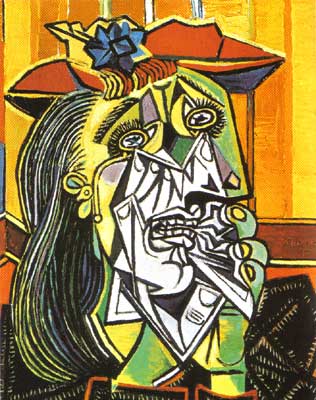
I have noticed that most of his paintings depicting disfigured people are of women, and this bothers me. It looks like he sliced them up and stuck them back together haphazardly. The 'cut and paste' effect I feel is violent and seems to me if someone dreams of doing this figuratively... I don't know but I find it actually makes me recoil.

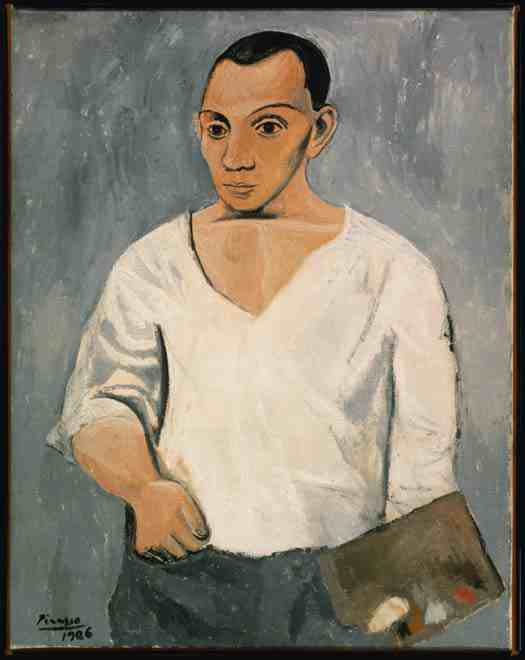
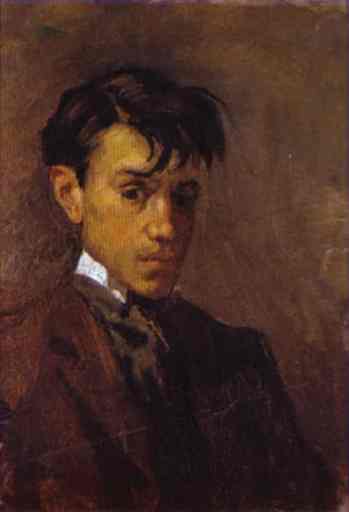
Picasso's self-portraits are for the most part quite complimentary. Those in 1896 and 1900 show a Simon from Misfits look-a-like (Future Simon obviously). The 'Yo Picasso' one, well yes his eye is a bit lopsided but he still looks pretty fit. The Pablo in 'Self Portrait with Cloak' from his blue period series is really quite attractive, in that 'brooding genius' kind of way. In 1906 there's the one 'with the Palette' in which he looks completely different, and his chest for some reason touches his chin, but again not an ugly guy. Then there's his most famous, that which is angular and geometrical. Perhaps you could say this is a bit butters. However in relation to his 'TĂȘte de Femme', 'A woman in a green hat' and 'Femme en Pleurs', he doesn't look bad.
Anyway, my point is why wasn't he ever cut up in his paintings?

And another thing. Picasso is quoted as having said "Art is a lie that makes us realise the truth." I fucking hate these kind of meaningless aphorisms, it makes him (it's nearly always a him) sound horribly pretentious and eager to be considered a thinker, a philosopher.